Diamond drilling vs RC drilling: which suits your programme?
Both methods put samples in your hands. They do it at different costs, different speeds and different levels of geological detail — and choosing wrong is expensive. Here is how we advise clients on Zambian ground.
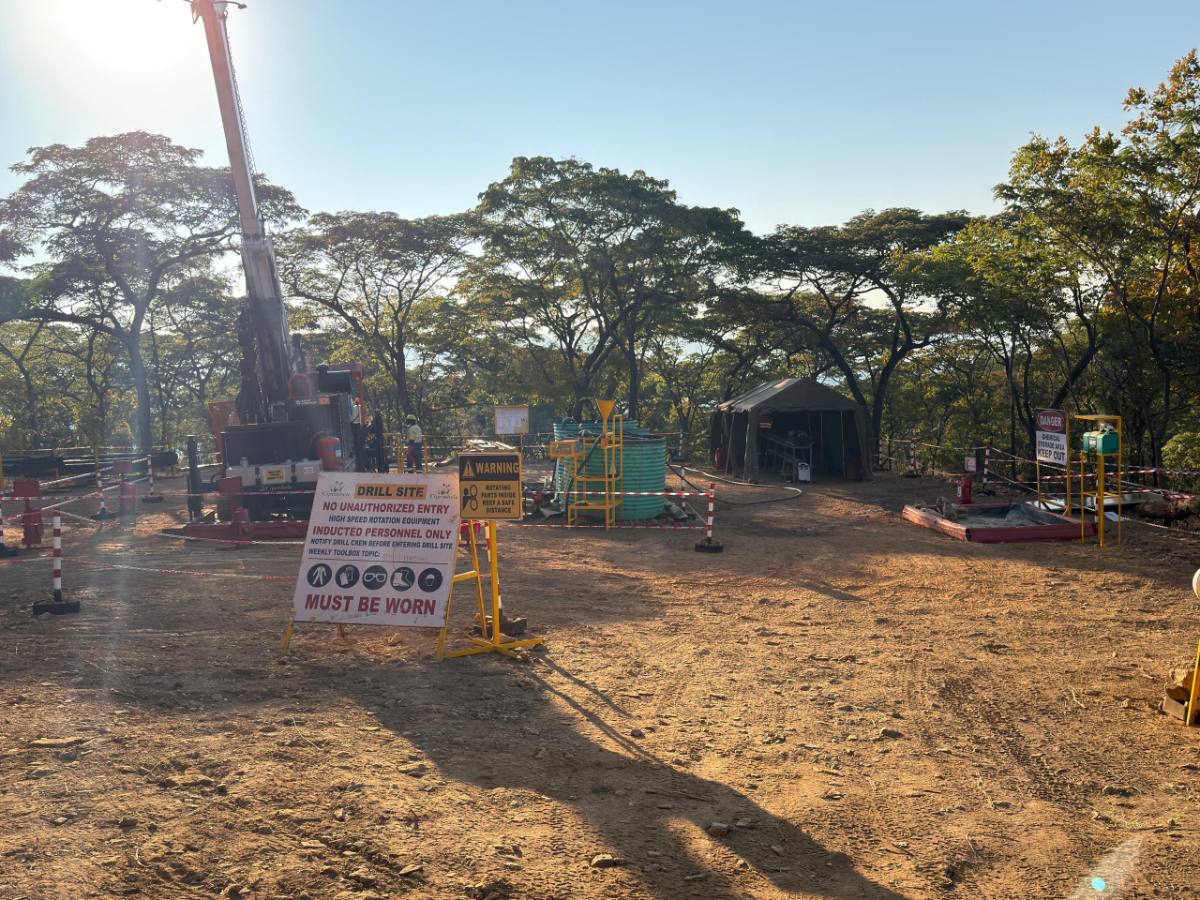
The short answer
Use RC drilling when you need many metres quickly and cheaply, and a chip sample is good enough — early-stage target testing, broad drill-outs, grade control. Use diamond core when the rock itself is the answer: structure, alteration, geotechnical data, resource-definition assays that must stand up to audit.
Most well-run programmes use both. A common pattern on the Copperbelt is RC to establish where mineralisation sits, then diamond core through the best intersections to understand why.
Cost and speed
RC drilling is typically less expensive per metre and considerably faster in the right ground. Diamond drilling costs more per metre and advances more slowly, particularly at depth where rod handling and core retrieval dominate cycle time.
But cost per metre is the wrong measure on its own. The right measure is cost per usable answer. A cheap hole that cannot resolve the question has to be redrilled, and remobilisation is far more expensive than the metres you saved.
Sample quality
RC returns rock chips lifted to surface by compressed air. Handled properly, RC gives reliable assay data. What it cannot give you is intact rock: no measured structural orientation, no vein relationships, no geotechnical logging, and a risk of down-hole contamination in wet or broken ground.
Diamond core returns a continuous cylinder of rock. You can log it, orient it, photograph it, measure fracture frequency, and re-examine it years later. For a resource that will be reported publicly or financed, that auditability matters.
Depth and ground conditions
RC has a practical depth ceiling — sample return degrades as depth and water inflow increase. Diamond drilling goes far deeper: our Boart Longyear LF90D reaches 1,080m in N size and 725m in H size, and we completed a single 788.63m hole at Mingomba in under a month.
Broken ground changes the calculation entirely. In the fractured formations and heavy water loss we met at Kanyamata, standard coring loses recovery. Switching to triple-tube barrels stabilises the core inside the barrel and preserves the very intervals that matter most — the fractured, mineralised ones.
A practical decision checklist
What to ask a contractor before you commit
Ask what happens when the ground changes mid-hole. A contractor who can only run one configuration will keep drilling and hand you poor recovery. Ask whether triple-tube is held on site, not ordered from town. Ask how daily data reaches your geologists — we run Starlink and CorePlan so your team sees results the same shift, not the following week.
And ask about safety performance, because a contractor with incidents will cost you schedule. We have completed more than 56,427 metres with zero lost-time injuries.
Not sure which method fits?
Send us your geology, target depths and timeline. We will propose a method and rig mix — and tell you honestly if a cheaper approach would answer your question just as well.
Request a quote